The Golden Key

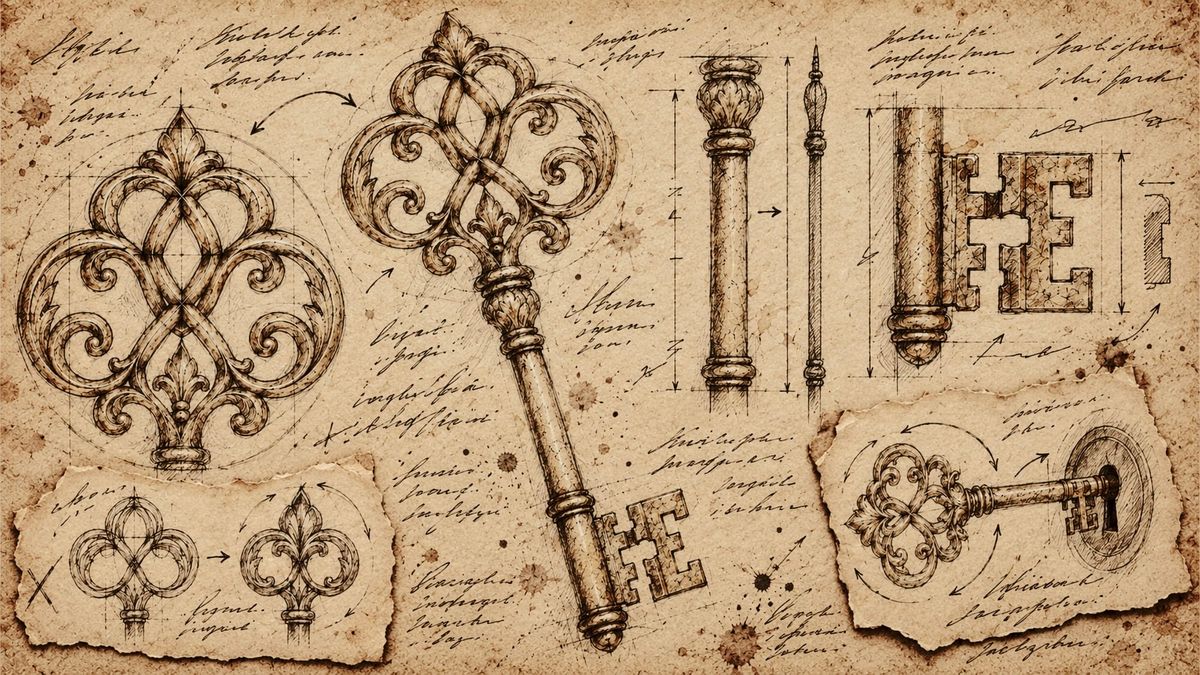
Three truths followed the golden key into Maezhiir.
It would fit any lock.
The first thing touched by the person who turned it would become solid gold.
And it would answer each person only once.
Baron Orrel considered the final truth proof that the magic was safe.
Then he considered it again—and understood the arithmetic.
He mounted an old lock upon a wooden stand in his great hall. Beside it, he placed an iron ingot. Orrel turned the key, touched the iron, and laughed as gold spread beneath his fingers like sunlight across water.
The following morning, he summoned his servants.
Each turned the key.
Each touched an ingot.
Each received a copper coin for the miracle.
Soon the servants were followed by soldiers, prisoners, debtors, and every subject unable to pay the baron’s newest levy: the Golden Tithe.
A clerk recorded every name.
Beside each, he wrote:
SPENT.
“Only once,” the people were warned, as though they had squandered something that had never belonged to them.
By winter, Baron Orrel’s treasury groaned beneath the weight of gold. His people, however, had begun to starve. Fields stood untended while farmers waited in his hall. Blacksmiths could not shoe horses because their iron had been carried to the castle. Even the bronze bell from the village shrine was melted down and recast into bars for the key.
When every adult in the barony had been marked SPENT, Orrel ordered the children brought to him.
The youngest came first.
Small hands turned the key. Small hands touched iron.
Some children cried when the gold appeared.
Baron Orrel never understood why.
The final child was a locksmith’s daughter named Mara. She was twelve years old and walked into the hall alone.
Her father had died in the baron’s prison owing three silver crowns.
Orrel sat upon his throne, smiling down at her.
“You should be proud,” he said. “Few children are given the opportunity to enrich their homeland.”
Mara studied the key.
“Anything I touch?”
“Anything,” said Orrel.
“And the key will never work for me again?”
“Magic does not repeat its gifts.”
Mara placed the golden key into the old lock.
The hall fell silent.
She turned it.
Baron Orrel leaned forward eagerly and held out an iron ingot.
Mara stepped past it.
Before the guards understood what she intended, she laid one finger upon the baron’s bare hand.
Gold raced up his arm.
Orrel had just enough time to look astonished.
Then the gleaming metal swallowed his face.
For several breaths, no one moved.
The guards had all been marked SPENT.
So had the soldiers.
So had the clerk.
And none of them seemed willing to draw steel for a golden statue.
The people broke Baron Orrel apart at the joints, because a man is easier to spend in pieces. By spring, his gold had purchased seed, livestock, and enough grain to carry the barony through another winter.
The clerk struck Orrel’s name from the ledger.
Beside it, she wrote:
SPENT.
As for the key, she sealed it inside a black iron box and dropped it into the Ashen Sea.
This comforted everyone greatly.
At least, it did until a fisherman found a golden key inside the belly of a silver eel.